
Our Investment in Pliant: Building the Infrastructure for the Future of B2B Payments

Illuminate Financial is proud to co-lead Pliant’s $40 million Series B alongside Speedinvest and other top-tier investors. Here’s why we believe Pliant is poised to become the backbone of modern B2B payments — and why now is the right moment to back their vision.

The B2B Payments Challenge: Complexity, inefficiency, and no silver bullets
Despite rapid innovation in consumer payments, B2B payments remain a significant pain point. The process of businesses paying other businesses is far more complex than consumer transactions — involving intricate decision-making, large order quantities with hundreds (if not thousands) of line items, and multiple stakeholders requiring approvals at various levels of an organisation. As a result, manual processes, fragmented infrastructure, and slow settlement cycles continue to dominate.
Yet the market is booming. The European B2B payments sector is projected to grow from $573 billion in 2024 to $1,329 billion by 2033, driven by digital transformation and regulatory shifts such as PSD2. Card payments — which account for more than half of all non-cash transactions in the Eurozone — are leading this growth. In 2023 alone, card payment volumes in the EU surged by 10.7% year over year, up from 7.8% in 2022.
Payments Are Only One Piece of the Puzzle: European SMBs Face a Critical Need for Flexible Credit Solutions
More than 25% of Euro area SMBs report severe access-to-finance challenges, with only 14% successfully obtaining bank loans despite 48% considering them relevant. Extended payment terms: 52% of businesses delay supplier payments due to cash constraints. This has resulted in alternative financing demand surged in 2024, with 67% of Eurozone countries reporting increased SME interest in private debt funds and trade finance.
Credit cards are often the first port of call for businesses that need short-term financing. Corporate card spending in Europe grew 7.4% annually (2020–2025), reflecting SMBs’ shift toward payment-linked credit solutions to bridge cash flow gaps. However traditional corporate card offerings, especially from incumbent banks, often fall short-lacking flexibility, digital controls, and seamless integration with modern financial systems.
Why Hasn’t This Been Solved Until Now?
We believe we are witnessing a once-in-a-generation shift: the convergence of macro trends — including embedded finance, the digitalisation of business processes, and rising demand for flexible credit — has set the stage for a new generation of solutions to emerge. Businesses today require:
- Real-time, data-rich reconciliation and seamless integration with accounting and ERP systems
- Flexible spend controls and approval workflows
- Credit that matches their cash cycle — and working capital that’s ideally free (so good borrowers are incentivised to use it)
Speed, flexibility, and control over cash flow have become must-haves, not nice-to-haves. Yet most banks have struggled to deliver this to their business customers, weighed down by legacy systems and slow innovation cycles. This is where Pliant comes in.
The Pliant Advantage: Reinventing the Corporate Card as a B2B Payments OS
Pliant has repurposed the humble credit card to address the above challenges head-on. The company is set to redefine B2B payments with its full-stack, API-first platform that goes far beyond card issuance.
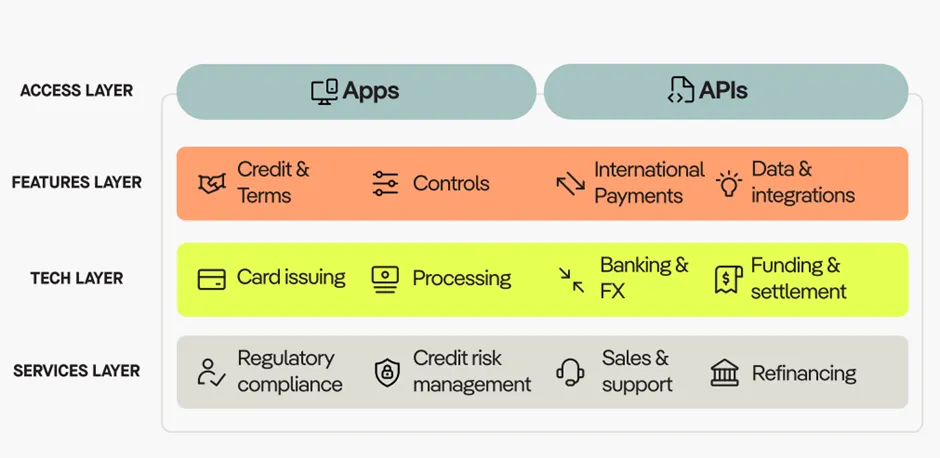
Their infrastructure enables:
- Issuing physical and virtual credit cards in multiple currencies and countries
- Automating spend management and reporting
- Providing flexible credit
- Seamless integration with accounting and ERP systems
This vertical integration — controlling card issuance, transaction processing, compliance, and credit — allows Pliant to deliver a seamless, secure, and scalable solution for industries with complex payment needs, from travel and fleet management to banking and SaaS.
Pliant’s Hybrid Distribution Go-To-Market: A Platform Trusted by Both Banks and Businesses
Pliant’s technology is not just appealing to companies directly; the platform’s infrastructure can also be leveraged by third parties. Software providers like Candis and Circula rely on Pliant to offer a white-labelled version of the solution to their end customers — and it has even attracted established banks looking to modernise their corporate card offerings.
Many banks across Europe recognise that their current corporate credit card solutions lag behind modern expectations — lacking the flexibility, digital experience, and integration capabilities that business clients now demand. As a result, Pliant presents a compelling, differentiated proposition for banks. Its modular, API-driven technology enables banks to rapidly launch innovative credit card programmes, automate expense management, and provide real-time controls and analytics — features that are often difficult and costly to build in-house.
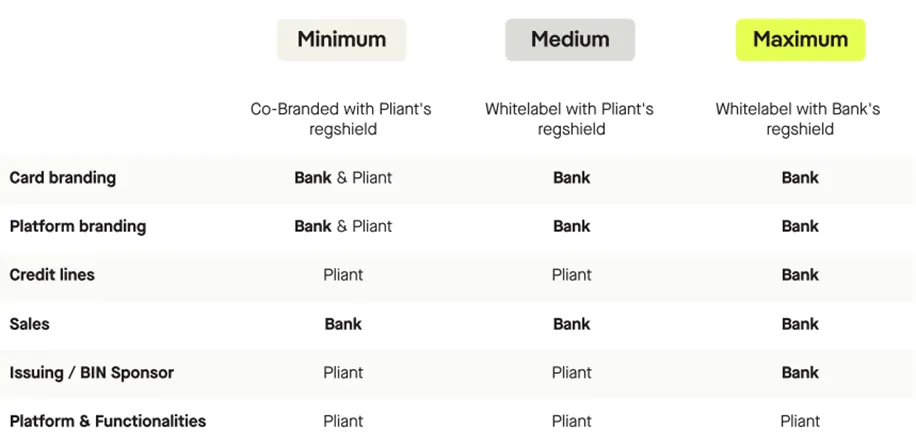
Banks value Pliant’s modular approach, which allows them to select the components that best fit their needs — whether it’s leveraging their own balance sheet for credit, maintaining the customer relationship, or embedding Pliant’s technology into their existing infrastructure. This flexibility is crucial as banks look to differentiate in a competitive landscape while managing risk and regulatory requirements.
Execution and Momentum: A Team That Delivers
We’ve followed Malte and the Pliant team for years — and they’ve consistently exceeded expectations. Their rare combination of deep domain expertise and disciplined, hyper-growth execution makes them stand out. With fresh funding, they are set to scale across Europe and expand into the US — a large, underpenetrated market ripe for disruption.
The results speak for themselves:
- 3,500+ businesses and 20+ partners served
- Consecutive years of triple-digit revenue growth
Our Thesis: The Operating System for B2B Payments
Illuminate Financial’s investment in Pliant is a bet on the future infrastructure of B2B payments. We believe Pliant is not just building a better card — they are becoming the operating system for business payments, spend management, and embedded finance. Their API-first, modular platform, regulatory agility, and relentless focus on customer needs set them apart as a defining European fintech success story. It’s a bold vision they are pursuing — and we couldn’t think of a better team to make it happen.
We’re excited to support Pliant as they build the next generation of B2B payments — empowering businesses to operate with greater control, efficiency, and confidence.