
Why there’s still a billion dollar opportunity in the Treasury Management market

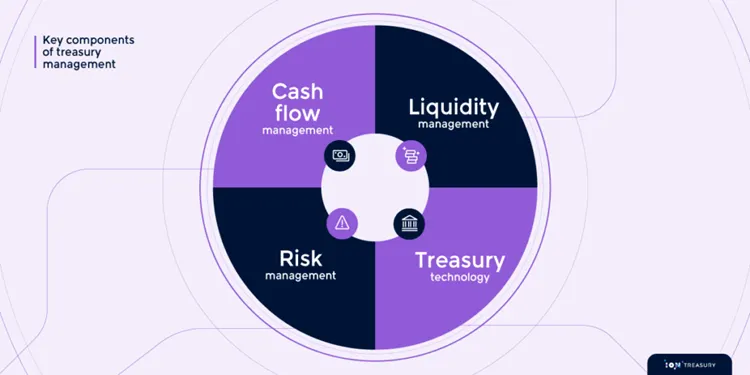
Treasury management encompasses all activities and processes involved in managing an organization’s finances, including cash flow forecasting, investing, risk assessment, and day-to-day operations like banking and invoicing.
In the wake of the Silicon Valley Bank (SVB) collapse, the second-largest bank failure in U.S. history with $209 billion in assets, the critical role of treasury management came into the spotlight. The incident served as a reminder of the importance of effective liquidity, risk, and investment management. In an environment where rates are more volatile and need to be factored into a treasury management strategy, this is even more true. Furthermore, PwC’s 2023 Global Treasury Benchmarking Survey[1] revealed that 62% of respondents are prioritizing liquidity management, while 58% are focusing on risk management.
This thesis will provide an in-depth exploration of the essential elements of treasury management, focusing on their critical importance in today’s dynamic economic environment. We will discuss the lessons learned from the SVB collapse, the impact of fluctuating interest rates, and the best practices for managing liquidity, risk, investments, and funding in these challenging times. By understanding and implementing effective treasury management strategies, companies can navigate the complex financial landscape, protect their financial health, and even capitalize on new opportunities.
A treasury management strategy includes managing foreign exchange risks and exposure, interest rates, liquidity, strategic investments, cash flow forecasting, risks...
There’s no one size fit all solution
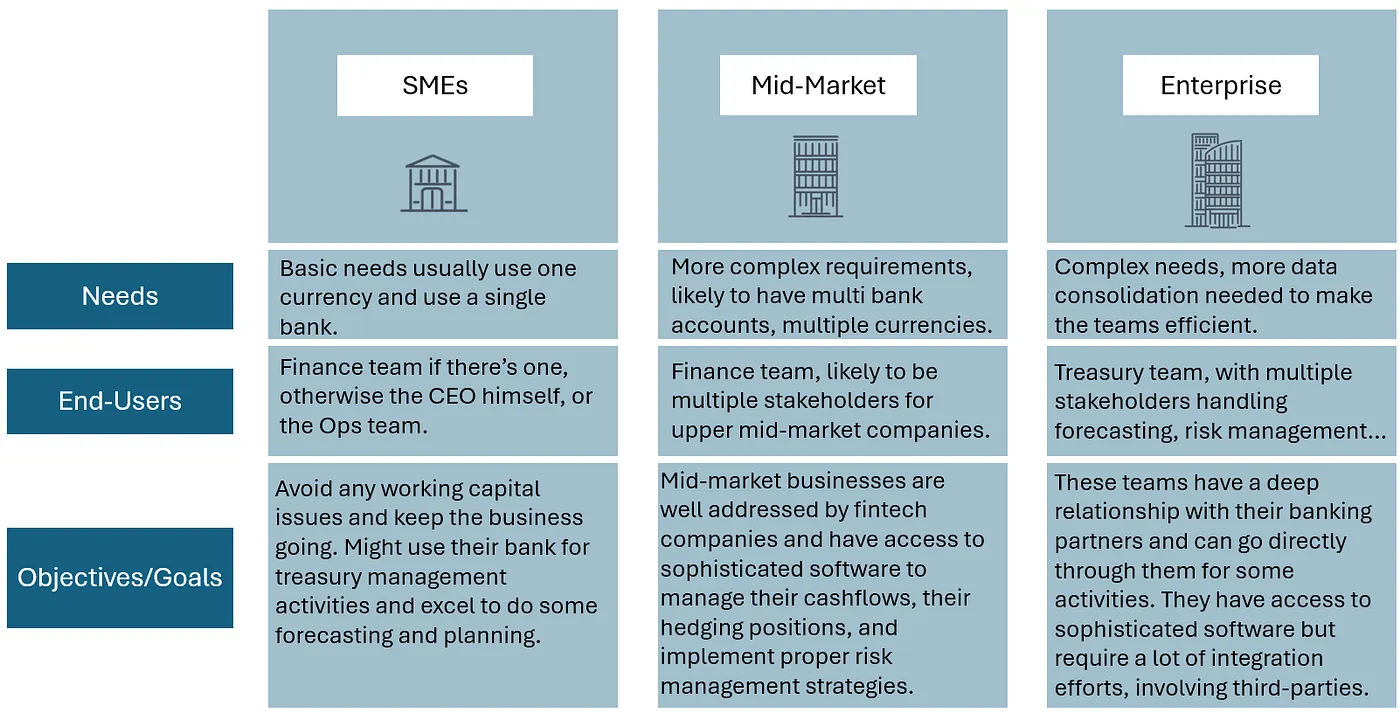
Treasury management products differ depending on what their ICP is. If we split the customer segments into 3 buckets; SMEs, mid-market and enterprises, they will all have very different requirements. Depending on the needs, and the end-users, the product will offer various features, going from AR/AP automation tools to investment features for larger enterprises. Ultimately, the sophistication of the product highly relates to the complexity of the customers, based on the number of banks used by the customer, number of currencies…
Overall, two main use cases for TMS stand-out:
1. As a Payment Hub
The primary use case for treasury management systems (TMS) is to function as a payment hub. Companies typically manage multiple inflows and outflows of funds. They receive payments from customers and make payments to vendors, service loans, handle taxes, and manage intercompany transactions. These cash flows often originate from different sources and might involve multiple currencies. A TMS serving as a payment hub integrates seamlessly with the banks and payment providers that the company works with. This integration streamlines the payment process, ensuring efficient and accurate handling of all financial transactions across various accounts and currencies.
2. Working Capital and Cash Flow Management
The second common use case is managing working capital and cash flow for the business. With numerous inflows and outflows, including loan payments and currency hedges, companies need to maintain a clear view of their cash flow and working capital. A TMS helps by providing real-time data on these financial movements, enabling businesses to see their current cash position and predict future cash flows accurately. This real-time visibility is crucial for effective treasury operations, though it may vary depending on the customer segment and the ERP systems they use. For SMEs and mid-market companies, real-time transaction flows might not always be feasible, but a TMS can still significantly enhance their cash flow management capabilities.
Current offering on the market for mid-market companies and enterprises
First, it’s important to understand that the primary users of treasury management systems have been large enterprises. While most are using some form of TMS, mid-market and small enterprises are largely underserved, with a low market penetration. Over the past few years, we’ve seen an increasing number of businesses going after the mid-market segment given the push towards digital transformation, the need to manage growth and increasing financial complexity, hence providing more affordable, scalable TMS solutions tailored for mid-sized companies.
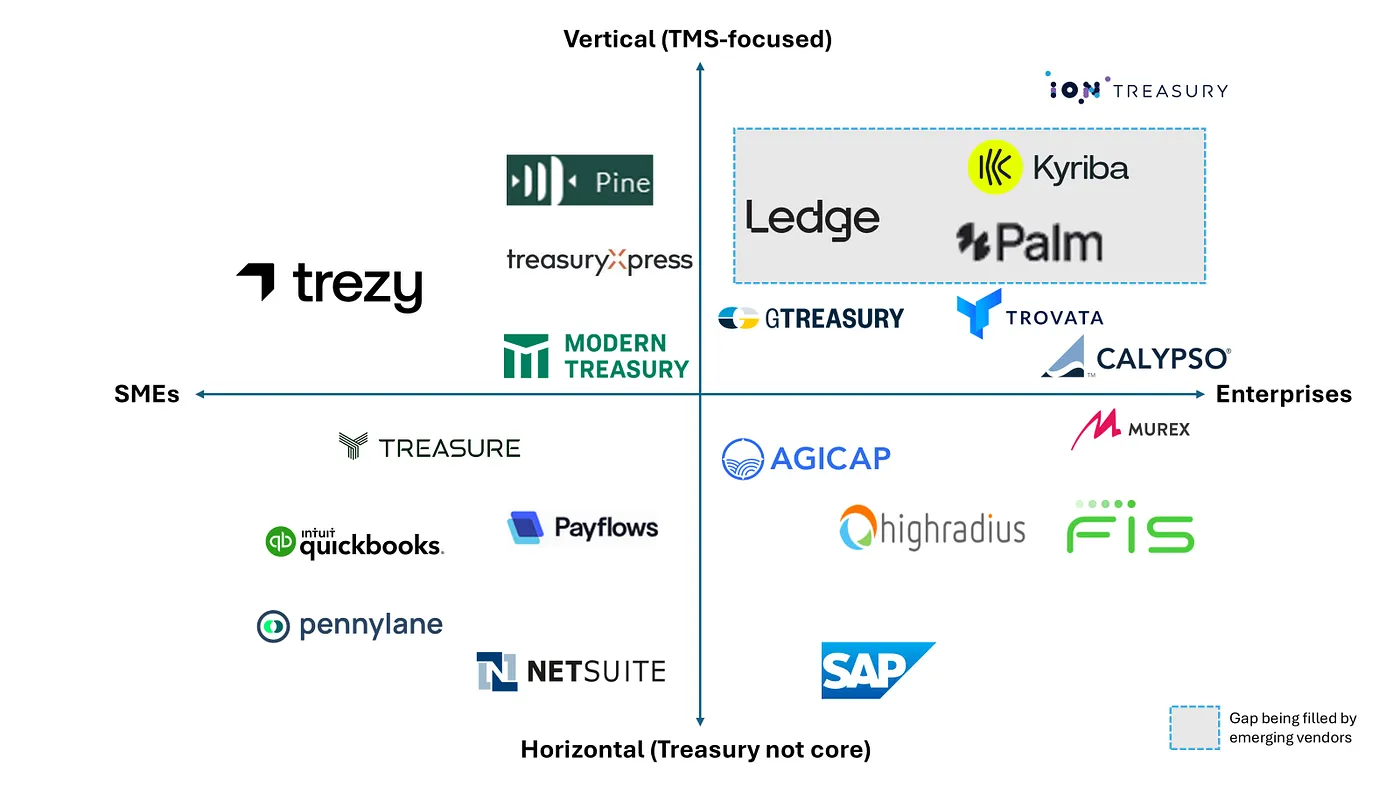
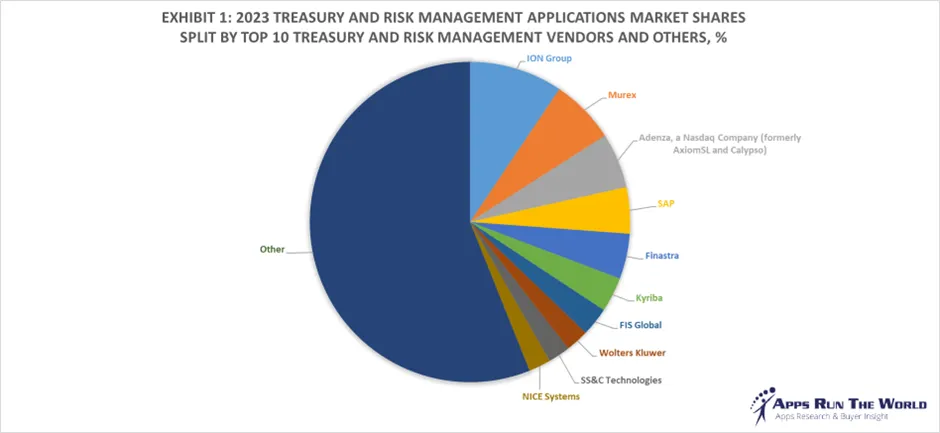
Today, there are incumbents in the TMS space for enterprises include FIS, ION Group (Reval and WallStreet), Finastra, Calypso but also SAP. These software providers offer a broad range of features, to be a one stop shop for treasury management teams and allow them to have a consolidated view of their cashflows and overall cash balance. Given the integrations required by large companies to connect other enterprise systems to break data silos, and build the banking integrations, the implementation process takes between 6 and 18 months, and for most providers the need to involve third parties to help with the integration. After conducting expert calls, we realized that many enterprises were not selecting just one TMS, but sometimes a couple or more. Different TMS platforms may excel in various areas of treasury management. For example, one system might offer superior capabilities in cash and liquidity management, while another might provide better risk management or hedge accounting features. By using multiple systems, enterprises can leverage the best features of each.
Regarding the mid-market, adoption is lower, but there are already a number of players addressing this segment. The main players are Kyriba, GTreasury, Trovata, Ledge, Modern Treasury and to some extent FIS, although Kyriba is still the market leader, especially in the US. Depending on which fringe of the mid-market they’re going after, the features they offer will be quite different. For instance, Modern Treasury, going for the lower end of the mid-market segment, the basic features include bank integrations, real-time data and reporting, payment processing (bank integrations), fraud detection (regulatory compliance), and risk mitigation. At the higher end of the market, some add-on capabilities include FX hedging, FX rate management, real-time changes into the rate, netting…
Some interviewees mentioned Kyriba is likely to be a market leader for now as their platform is more horizontal, and offers stronger integrations with banks and ERPs. Some emerging vendors are trying to compete on price, but ultimately depending on how sophisticated the customer is and how broad of a platform they want, they’ll still go for the premium product. Another observation was the element of herding in adoption, once a tool emerges as the “winner” it is likely to get adopted by the peer group, though the data still speaks to a fragmented market.
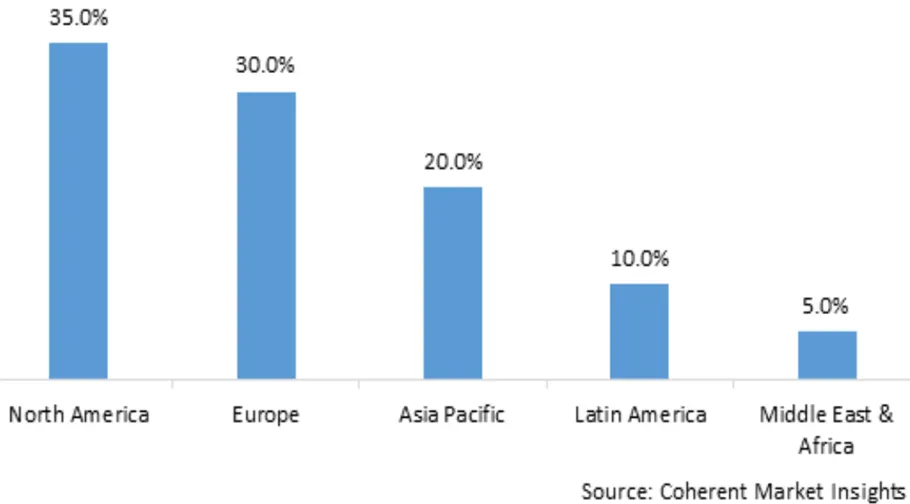
A massive opportunity in the Mid & Enterprise markets
Despite the number of players in the market, we believe there’s still an opportunity for emerging vendors to get significant market shares.
The mid-market and enterprise market is yet to fully adopt treasury management software, and even though the adoption rate is increasing, it remains fairly low especially for the mid-market segment. These customers have various degrees of sophistication, and while on the lower end of the market they’ll need some basic features and will have a limited willingness to pay, the higher of the end of the market offers a very attractive opportunity. While the product needs more complexity, the willingness to pay is much higher and contracts range from $100,000 to $1,000,000 for the bigger customers (closer to $1bn in revenue). Once customers adopt a tool these tend to be sticky, as integration can take 6–12 months depending on the complexity of the organisation (and if combined with integrating a new ERP system that might increase to 18–24 months).
Although these platforms offer a wide range of products, we believe there’s still room to disrupt this industry, especially with artificial intelligence on the rise. We received several comments that AI could have a significant impact on the treasury management teams activity, especially when it comes to cashflow forecasting. Along with improving accuracy, AI would help treasury managers detect complex patterns and hidden relationships between cashflows, automate data integration from multiple sources, improve risk management, and better integrate parameters like market conditions to allocate cash across different accounts and investment strategies.
Emerging vendors like Palm or Trezy natively integrate AI in their products to automate some processes so customers have a smoother experience. Other companies like Kyriba are still in the process of integrating AI features within their offering, especially within their cash forecasting product, increasing accuracy but also the user experience.
We believe (hope!) that AI-driven automation might significantly compress integration timelines, making a case for new entrants upending the current competitive landscape.
We’ll keep sharing our insights on this market as we refine our thinking and look for a potential winner.
We hope you enjoyed our insights! If you’re building in the Treasury Management space, reach out to Hugo hh@illuminatefinancial.com to chat!
[1] https://www.pwc.be/en/news-publications/2023/global-treasury-survey-2023.html