
Our investment in Tookitaki — machine learning for financial services


We’re happy to announce that Illuminate has led a $7.5m Series A investment in Tookitaki, with participation from existing investors Jungle Ventures and Enterprise Singapore.
Much has been written about how artificial intelligence and machine learning technologies could be used in financial services; but until we met founders Abhishek Chaterjee and Jeeta Bandopadhyay, we were yet to find a business whose software was being used in production by banks to manage the numerous alerts being generated by rules bases systems.
What does the company do?
Tookitaki have built a flexible and dynamic machine learning engine with configurable enterprise ready applications to help financial institutions better manage their anti-money laundering (transaction monitoring and name screening) and reconciliation obligations.
In plain English — they take all the repetitive and annoying alerts that come from legacy rules-based systems which hundreds of staff process every day and sort them into what is suspicious, what isn’t, and scan for activity that might have slipped through the nets all together.
Importantly, this technology sits like a layer on top of existing systems meaning there is no large-scale change of process or need to remove any core infrastructure. Instead, by better filtering the noise, they allow staff to focus on true malicious activity, discover new patterns, manage exceptions and combat financial crime. Given the huge fines being handed out to financial institutions globally for failing to prevent money laundering, this technology allows banks to get back ahead of the curve.
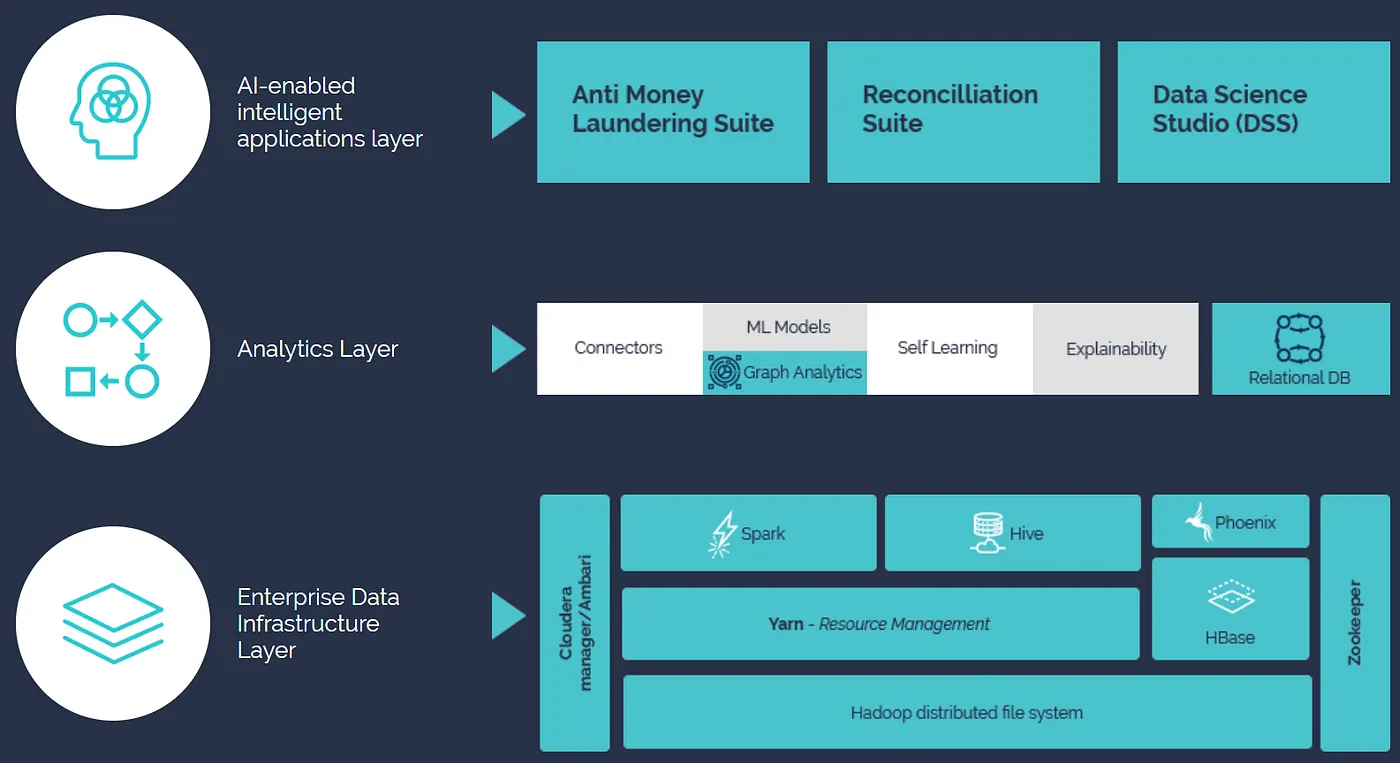
A practical use case of AI technology and understanding of the business problem
There is a lot to get excited about when we look at the potential impact of artificial intelligence in financial services — however we are first, and foremost, business solutions focused investors. If you are running a business, you want a solution to a problem, not a new toy, so as we search for companies to invest in, we look for entrepreneurs focused on use cases, not buzz words. We have found that in Tookitaki.
The team understands the pain of reconciliations not matching, or constant alerts masking real financial crime. On top of this they understand who their customer is and what they need in a solution. As well as being able to work alongside existing systems, banks need a solution they can explain to regulators. A magic black box simply will not cut it. That is why every decision made by the Tookitaki algorithms are fully explainable and auditable.
Augments, not automates
As exciting as emerging machine learning and artificial intelligence technologies are, we are sceptical that business are ready to move immediately to a fully automated state. Humans will want to understand the reasons behind decisions made by technology, and be the ones operating it. For this reason, we do not think completely unsupervised machine learning technologies will gain widespread adoption today — especially in industries where you must be able to explain everything to a regulator. The higher the stakes, the less likely it is that business leaders will be willing to take a risk on a new piece of technology that they cannot understand. Tookitaki’s transparent processes mean business owners are able to get comfortable and, for this reason, it is one of the first use cases of AI and ML being rolled into production in AML globally. An amazing achievement for a young company! (Deloitte’s white paper available here.)
Instead of viewing the Tookitaki product suite as software that automates AML or reconciliation, we see it as a data processing solution that makes users more efficient and allows them to do their jobs better. Full automation will take time as it involves behavioural change. Augmenting existing procedures with technology that better processes and analyses data is the path of least resistance and first step in the journey.
A clear need to solve this problem now
One of the biggest challenges for enterprise software businesses is having a solution that is at the top of the priority stack for executives. Of the hundreds of ways an institution could improve its tech stack, only a handful are going to be implemented in any given year. At the very top of this list will be initiatives required by a regulator to combat financial crime.
If a criminal can launder money through the financial system, then the institutions who let this happen will, and are, being fined amounts that wipe out their quarterly, if not full year’s profit. The regulators do not care that the company has hundreds of staff sifting through dumb ‘false positives’; they care that you are being outsmarted by criminals and that your processes are failing. We believe this makes Tookitaki a must, and not a nice to have.
Flexibility and scalability for future use cases
If everything, like chess, was governed by rules, then we would be able to think ahead and predict all the ways in which systems could be beaten. It doesn’t. Human behaviour is complex and nuanced which makes it virtually impossible to predict the ways in which things will change. This is a challenge for companies with enterprise software; how can you make sure your solutions grow and adapt? There isn’t a simple answer to this, so we think businesses should aim to be as flexible as possible from the outset.
Focusing on a business problem, and not being fixed on a specific technology, is one way to ensure flexibility. Another is architecting your technology in a way which allows you to leverage new techniques, integrate with any system, and fit easily into different workflows. As Tookitaki’s machine learning algorithms are powered by the same underlying data science studio, the team can easily deploy additional modules to respond to and adapt to new problems. Being connected back to the underlying platform also means the machine is constantly learning from the data being processed and, over time, it will get better and more effective at dealing with exceptions and alerts — laying the groundwork for a more collaborative future approach where pattern sharing between actors and regulators could become the norm.
This is only the beginning of the company’s journey, but we are excited to be onboard and look forward to working with the team to build Tookitaki into a global leader.