
ERP 2.0: From Legacy Suites to AI-Driven Composable Platforms

ERP 2.0: From Legacy Suites to AI-Driven Composable Platforms
Although there’s no consensus on how large the ERP market is ($183bn in 2025 according to NetSuite, while other estimates put it closer to $55bn), there’s been little to no evolution in the last 30 years. Why is that?
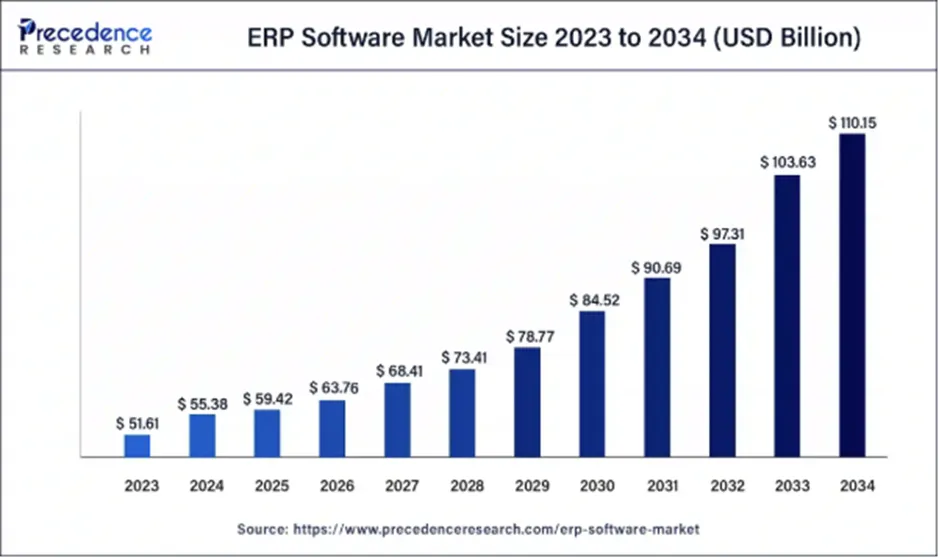
There Have Been Improvements, But No Major Strides Forward
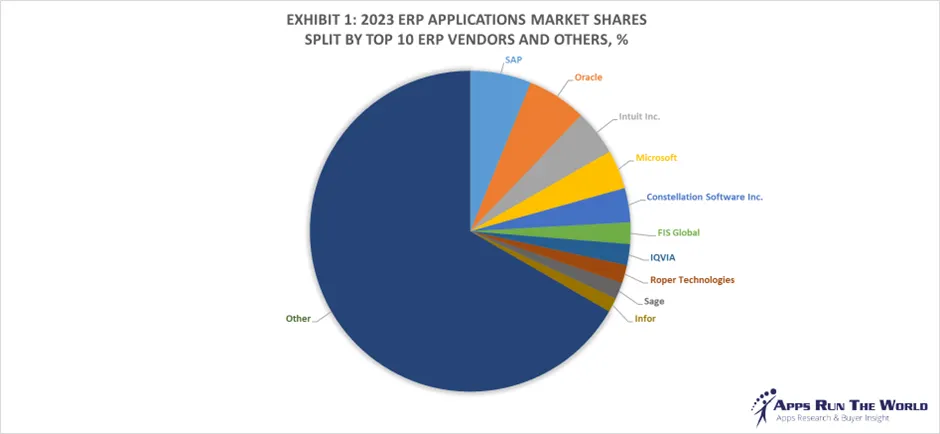
SAP, QuickBooks (Intuit), NetSuite (Oracle), Visma, and Microsoft Dynamics have established themselves as leaders across various customer segments. In adjacent categories like AR/AP automation and treasury management, category-defining businesses have emerged — often built on top of ERP systems — even though many ERPs offer these features natively.
The rise of APIs has allowed new vendors to integrate into the ERP ecosystem more easily. However, this has led to increasing product duplication, with customers frequently double-paying for overlapping functionalities.
Not All Businesses Need an ERP
As businesses grow in complexity and move into the mid-market or enterprise segment, they begin to feel the challenges associated with ERP systems more acutely. Often, they lack the internal headcount or specialised skills to manage such platforms effectively.
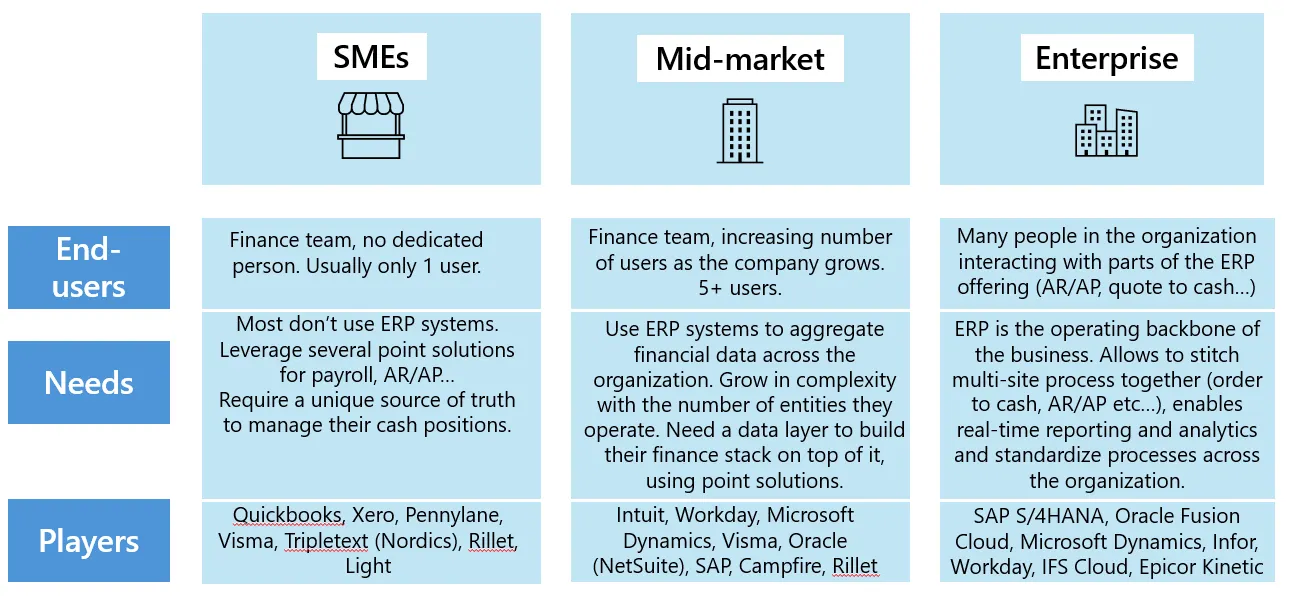
While enterprise-grade ERPs offer significantly deeper functionality than SME solutions, their implementation can be lengthy and resource-intensive — typically taking 6 to 24 months for larger organisations and often requiring external consultants to support the process.
Customers Are Currently Facing Vendor Lock-In
Major ERP vendors have successfully built defensible moats through their deep banking integrations, broad feature sets, and expansive ecosystems. As businesses scale or outgrow their current ERP systems, switching becomes increasingly difficult. Implementations are often highly customised and time-consuming, with data fragmented across multiple ERPs by geography, business line, and function.
Common Challenges with ERP Adoption or Migration:
- Data Accuracy & Consolidation:
Consolidating data across the organisation is labour-intensive and prone to human error, making it difficult to ensure accuracy. - Unpredictable Timelines:
ERP implementation timelines are notoriously difficult to keep on track, often exceeding initial estimates. - Resource Drain:
Deploying or switching ERP systems demands significant human resources, diverting attention from revenue-generating activities. - Limited Integrations:
Many ERP platforms still lack seamless integration with modern tools and adjacent systems. - Sunk Costs & Internal Politics:
Existing investments — both financial and organisational — can hinder objective decision-making and stall migration efforts.
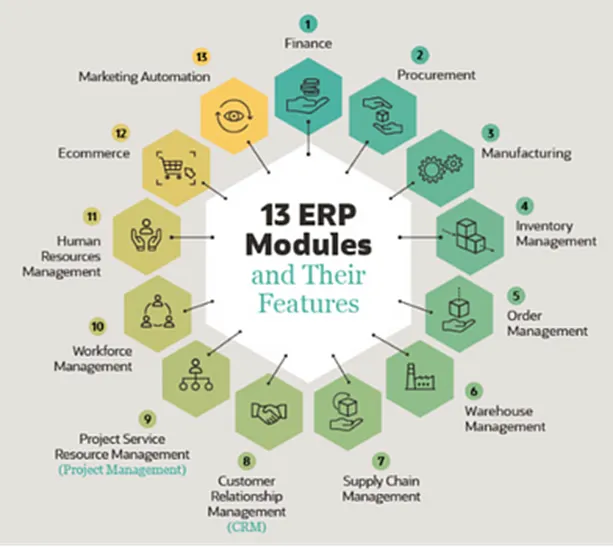
There’s an Opportunity for a New NetSuite
ERP systems are purpose-built for complex companies — those operating across multiple entities and geographies, with a critical need for consolidated, real-time data. That’s why we’re most bullish on the mid-market and enterprise segments.
These businesses require advanced functionality, but equally value flexibility. Some of the must-have capabilities include:
- Modular design, allowing organisations to add functionality over time
- Multi-company or multi-site management, supporting regional or international expansion
- Cloud or hybrid deployment models, enabling scalability
- Seamless integration with existing software (e.g. CRMs, eCommerce platforms)
To avoid data silos, modern ERPs must offer native integrations or pre-built connectors with tools like HubSpot, Shopify, and Salesforce. Even the strongest proponents of monolithic control platforms (MCPs) acknowledge the importance of solving the data silo issue.
Table stakes for mid-market ERPs
For mid-sized companies, the baseline feature set includes:
- Core accounting (general ledger, AR/AP)
- Multi-currency support with real-time FX updates
- Advanced financial reporting and real-time dashboards
- Robust tax compliance tooling
For larger enterprises, we’d also expect inventory and supply chain management features to ensure smooth operations (especially for companies buying or selling physical products), multi-entity consolidation for subsidiary and parent organisations, and jurisdiction-specific tax compliance tools. Buyers would also expect forecasting, budget management, and approval workflows, along with payroll offerings. Last but not least, enterprises would benefit from a risk management module within the ERP — incorporating debt management and investment solutions — to effectively utilise and leverage their cash.
Sounds like a lot..?!
This complexity serves as a moat and helps explain why innovation and disruption in the ERP market have been so challenging.
Press enter or click to view image in full size
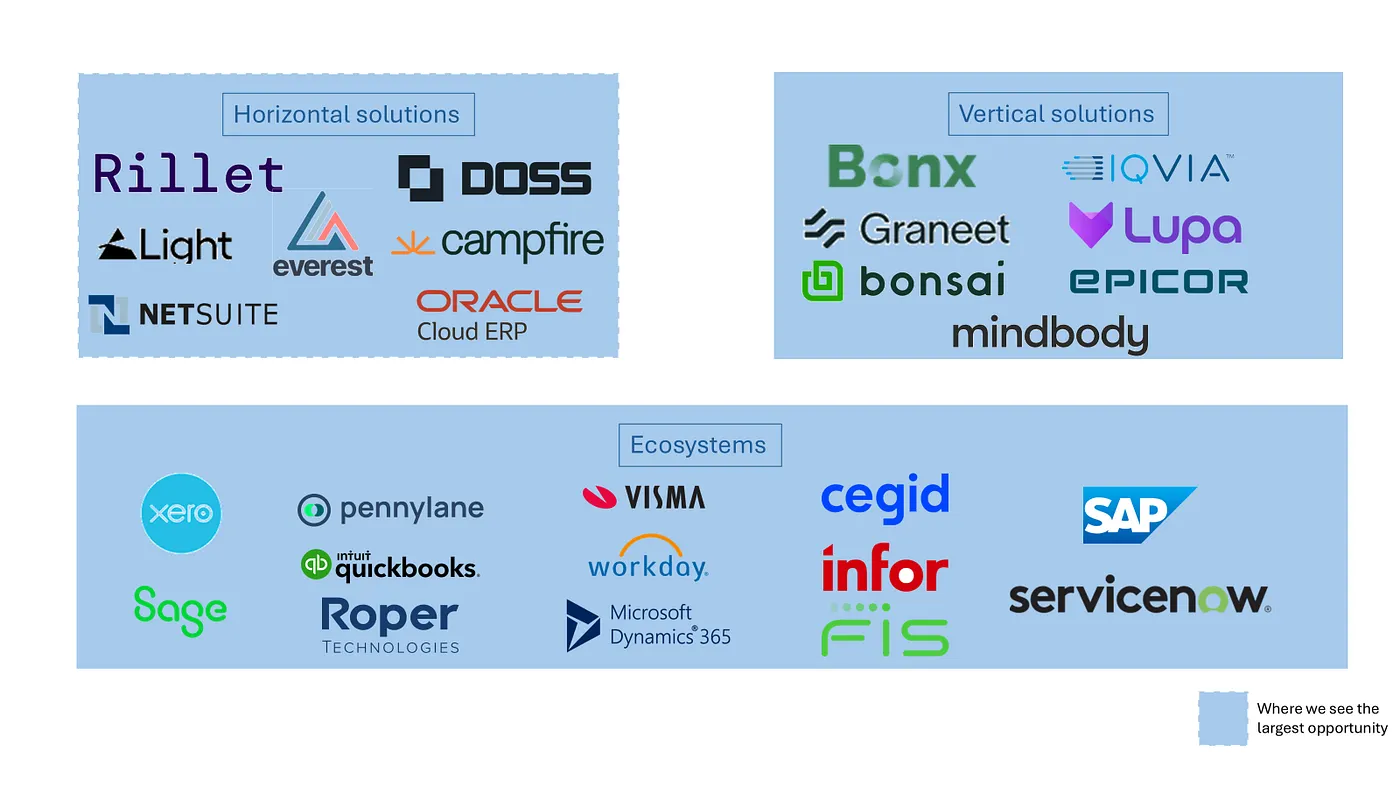
In an AI-First World, This Moat Could Crumble
The race is on. Leading, cash-generating incumbent ERP providers are now rolling out AI-powered features such as chatbots, automated financial closing, cash forecasting, and faster integrations.
However, they face the classic innovator’s dilemma — while startups can move faster and build from first principles.
Doss is a strong example of an AI-native ERP system targeting the mid-market segment, offering advanced integration automation and significantly reducing implementation timelines.
Campfire is also differentiating through its integration layer and ease of migration away from legacy systems like NetSuite.
Others, like Graneet, are taking a vertical approach — tailoring their offering specifically to the construction industry.
With build costs lower than ever, frustration with incumbents running high, and persistent fragmentation across the market, we’re excited about the opportunities for founders to innovate.
If you share this enthusiasm, we’d love to connect!